 VISC
VISC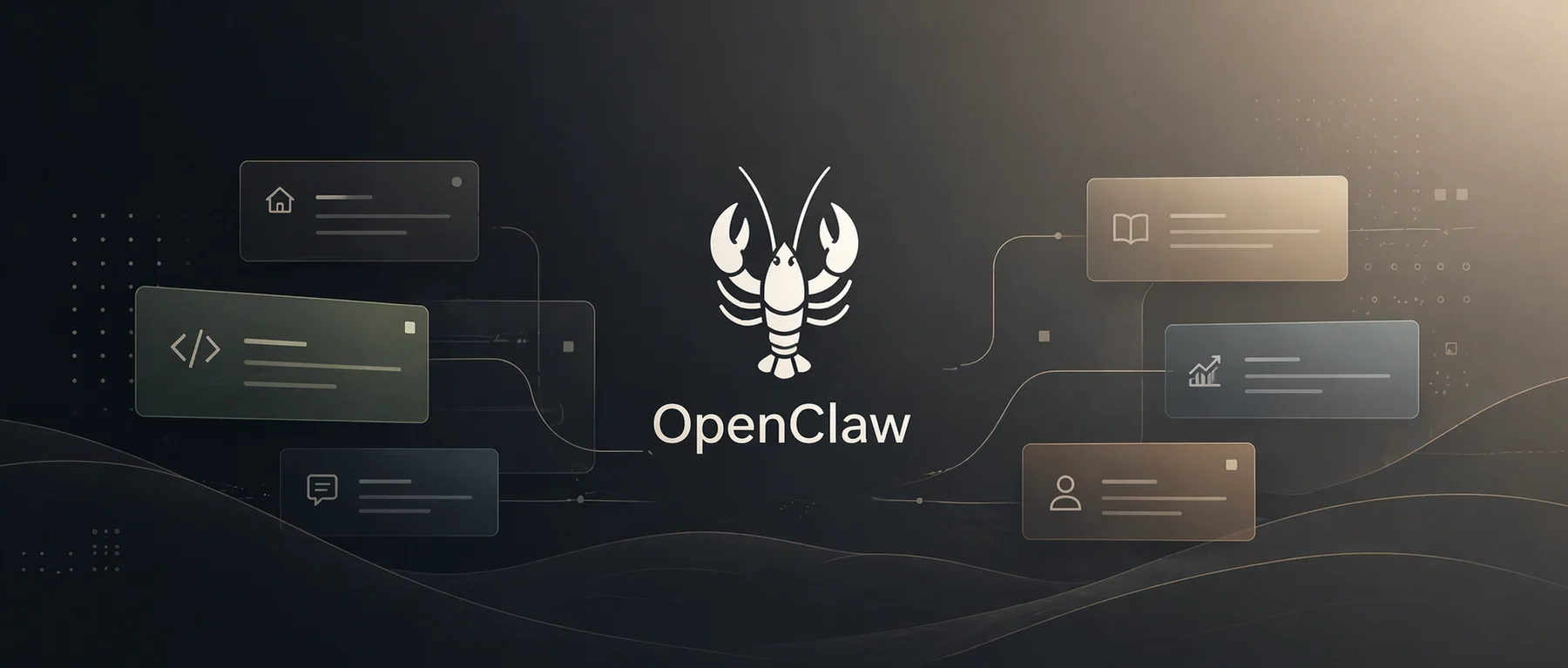
If I answer the question directly, my answer is yes.
But that answer needs an important condition.
How useful OpenClaw is depends not only on OpenClaw itself, but also on how capable the AI model behind it is. If the model is weak, hallucinates frequently, or confidently invents facts, OpenClaw may interrupt more than it helps. What was supposed to save time turns into repeated verification and correction, lowering efficiency instead.
My own view is clear: OpenClaw’s value is closely tied to the quality of the model it connects to.
I use ChatGPT. So far, its output has been reliable enough for daily communication and for tasks that involve organizing, analyzing, or generating content. Because that foundation is reasonably stable, my overall experience with OpenClaw has been smooth.
I mainly interact with OpenClaw through Discord.
Discord works well for me because it is built around channels. Each channel can represent an AI context with a different subject. Instead of mixing every conversation into one box, I can separate them by the type of work involved.
I currently use several channels.
One is for life: everyday questions, arrangements, plans, and personal matters.
Another is for programming, which I use frequently. It works at a computer, but the more unusual benefit is that I can use natural language through Discord on my phone. Programming used to mean sitting at a desk, opening an editor, and entering a formal work mode. Now, if an idea appears while I am away, I can ask AI to begin writing something or organizing the approach immediately.
There is also an information channel. It monitors sources I have specified, collects material on a schedule, summarizes and analyzes it, and sends regular updates. Information is no longer difficult to find; the problem is that there is too much of it. Letting AI perform the first layer of organization saves considerable attention.
I have an investing channel as well. I use it to research stocks and markets and to support analysis. I treat it as a research and organization tool, not a decision-maker. The final judgment remains mine, but the channel helps gather material and lay out possible lines of reasoning more quickly.
Recently I added a fiction channel. I have been writing fiction, have published it, and signed a contract, so I now keep related ideas, settings, and problems together in one place. That continuity makes it easier to keep the work from being interrupted by unrelated conversations.
More channels can be added later. For me, OpenClaw’s most direct benefit is that it gives my communication with AI a structure.
Without that structure, people easily put work, life, writing, and miscellaneous questions into one endless conversation. Over time, contexts overlap and the interaction becomes increasingly confusing. With OpenClaw and Discord, each channel has its own subject, context, and use case.
That is why I find it helpful in both work and life.
It does not merely help at one isolated point. It reorganizes the way I communicate with AI. Work goes to a work context, personal matters to a life context, and information, investing, and fiction each have their own place. AI becomes part of daily activity rather than a chat tool I remember only occasionally.
For now, this setup already meets my basic personal needs. It is useful rather than decorative.
Even so, I have not taken OpenClaw as far as it can go.
I still use it mainly as an intermediary—a more convenient entrance to AI. Strictly speaking, I have not trained it into a complete assistant. I have barely used the skills available through ClawHub, and I am still exploring the more proactive and automated capabilities that would make it feel like a real assistant.
So my present feeling is that I have begun using OpenClaw, but have not fully unfolded it.
It already helps me; I have little doubt about that. But today it is still more of a useful middle layer than the assistant I ultimately imagine.
I plan to keep studying and refining it: making it smarter, more proactive, and more deeply involved in my workflows instead of only responding to what I say.
If it reaches that point, its meaning will extend beyond giving me a convenient interface for AI. It may become a long-term assistant that works alongside me in both work and life.
Based on what I have seen so far, I think that path is possible.