 VISC
VISC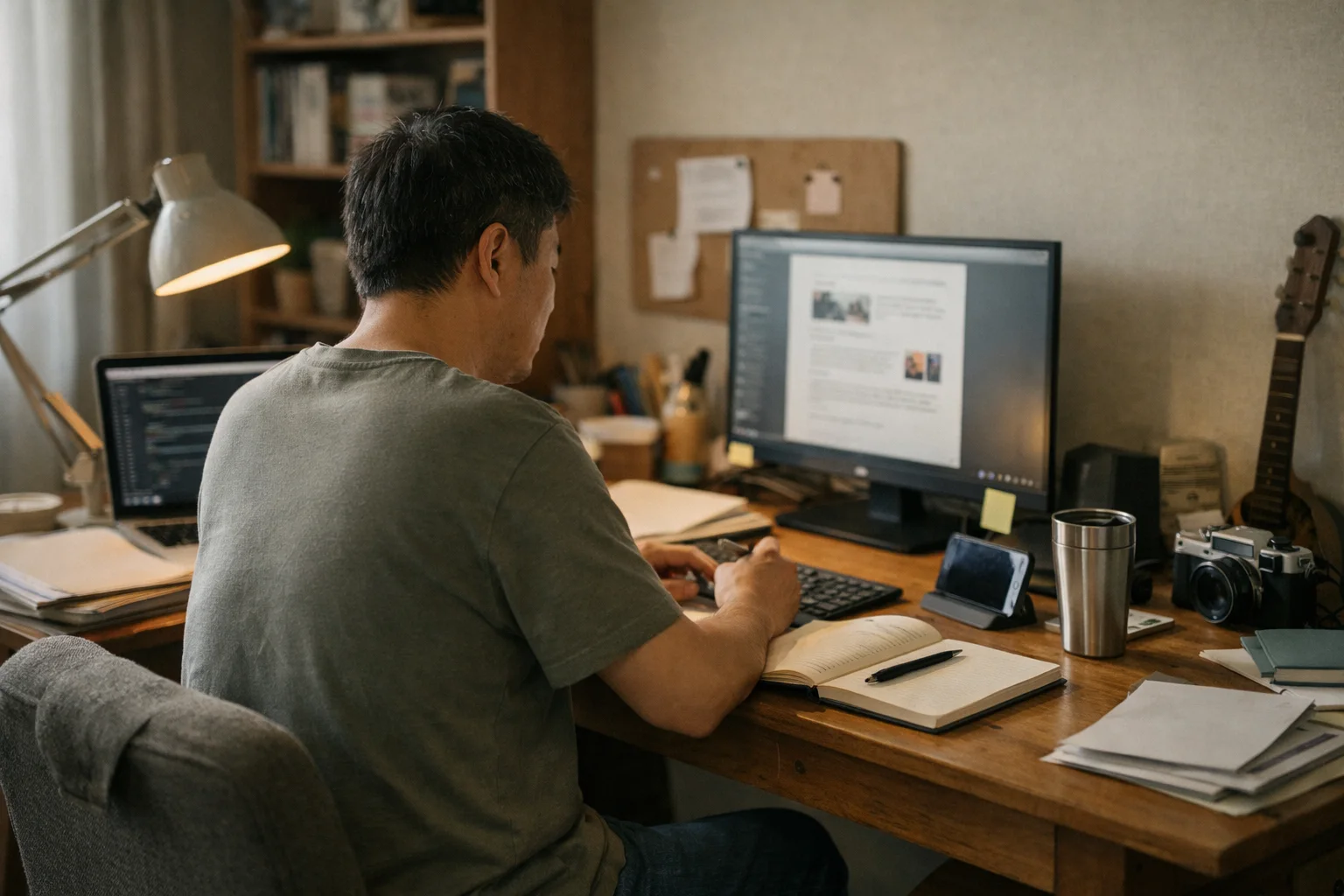
Lately I have been thinking about how men in their forties can actually use AI.
I no longer care very much about how much attention AI is receiving or which new concept has just appeared. What matters to me is whether it can become part of my work and life and provide real help.
So far, I think it can.
Start with work.
I now frequently use AI to write copy and develop plans. Poster copy, short-video scripts, and activity proposals are often used directly in my work rather than treated only as references.
Not everything is ready in one step. Images still have compatibility problems, especially when they contain text. Garbled characters sometimes appear, and many images still need a designer’s adjustment before they can be used. Even so, AI removes much of the time previously spent generating ideas, drafting, and exploring directions.
The benefit is direct: things that once required repeated polishing can now reach a first version quickly and be improved from there.
The same is true in daily life.
I use AI to help plan family trips. It can organize an initial route, accommodation options, daily schedule, and budget. I still make the final decisions, but the most mentally demanding first stage becomes much easier.
I also use AI to build websites, Mini Programs, and apps.
This is particularly practical for me. I know some frontend development but not backend development. In the past, many ideas stalled—not because they were impossible, but because there was too much missing knowledge and the threshold was too high. Today, tools such as Claude Code and ChatGPT Codex are mature enough that much of the code they produce can be used directly. With AI, I can gradually build small and medium-sized SaaS products and software.
That matters to me.
At this age, many people have ideas of their own. They want to build something and hope their future will not depend entirely on one fixed job. AI coding moves that possibility one step closer.
Recently, I have also been experimenting with writing fiction with AI.
It is no longer merely an experiment. The novel has been officially published on Fanqie Novel, signed under contract, and entered its recommendation period.
There are still many problems. Despite extensive settings, guidance, and rewriting, traces of AI remain and cannot be removed completely. I now see this less as a problem solved once than as a process of continuous improvement, advancing alongside the capabilities of AI itself.
Even so, AI helped me turn something that had existed only as an idea into a work that could be formally published and contracted. That alone feels meaningful.
Next, I want to explore text-to-video.
Some people are already using it to make short-form dramas, and I would like to try. I have not begun that work seriously, so there is little to report yet. But it is already clear that AI is moving beyond writing paragraphs or making images and entering more complete content-production workflows.
My conclusion is increasingly clear.
For people our age, the most realistic value of AI is applying it to actual work and life. It can improve efficiency, save time, and help us make things that we could not make before. Taken a step further, it may support a side business and gradually enable a more independent way of working.
People now talk about the OPC, or one-person company. I can see why the idea appeals to many middle-aged people. It does not mean quitting a job tomorrow. It means asking whether AI can connect your abilities in writing, planning, development, and creation so that one person can accomplish more.
My most direct feeling is that AI is no longer merely a topic making noise in the background.
For me, it has begun to become a genuinely usable tool. It helps at work and in daily life, and it reveals possibilities for side projects and personal creation.
For people in their forties, that help is concrete. At this stage, what we need is something that can be implemented, reduce effort, and help us complete a few more meaningful things.